What Does “Whole-Person Health” Actually Mean?

When we talk about health, most people think about annual physicals, clean eating, or getting their steps in. But true health is bigger than that.
Whole-person health means caring for your mind, your body, your relationships, and your environment, because they’re all connected.
At Lotus Bloom Psychology, this idea is at the heart of everything we do. And it’s also the heart behind our Love Your Health Community Health Fair.
Let’s break down what whole-person health really means and why it matters.
Mental Health is Health
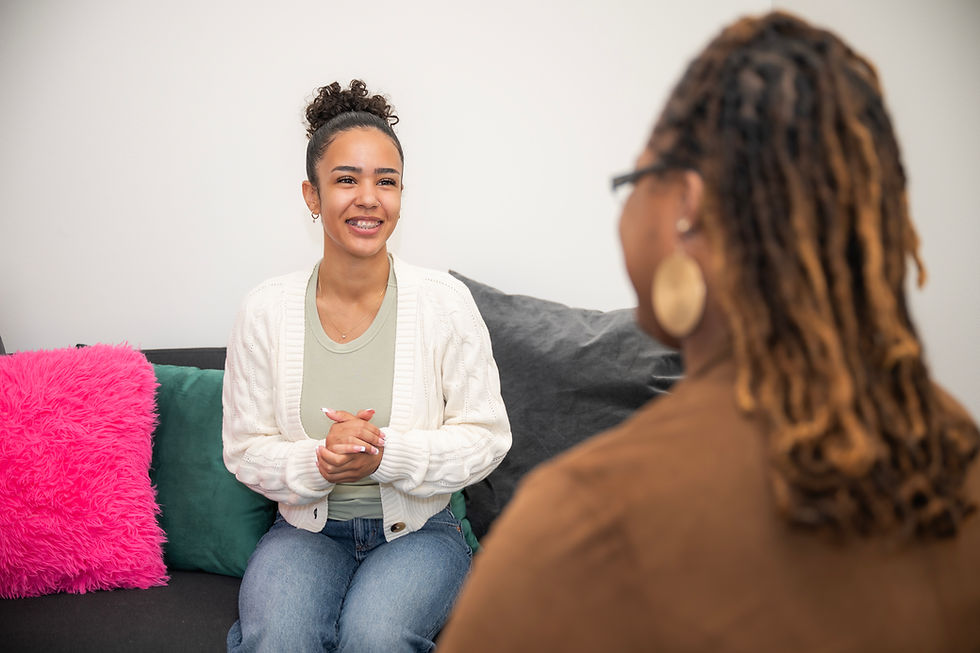
For decades, mental health was treated like something separate from “real” health.
But we now know:
Chronic stress impacts the immune system.
Anxiety can affect digestion, sleep, and heart health.
Depression can lower energy, motivation, and even pain tolerance.
Emotional regulation affects relationships, school performance, and work success.
Your brain is part of your body. If your mind is struggling, your body feels it too.
Therapy isn’t a last resort. It’s preventative care. It’s maintenance. It’s support for your nervous system and your relationships.
Mental health is not optional to overall wellness — it’s foundational.
Brain Health = Body Health

Your brain controls everything:
Sleep cycles
Hormone regulation
Focus and attention
Emotional responses
Stress reactions
When someone is navigating ADHD, anxiety, depression, trauma, or learning differences, it doesn’t just affect behavior. It affects how the entire system functions.
For example:
Poor sleep increases emotional reactivity.
Chronic overwhelm impacts concentration.
Untreated ADHD can lead to burnout and self-esteem challenges.
Ongoing stress keeps the nervous system in “fight or flight.”
Whole-person health means we don’t just ask, “What behavior do we see?”
We ask:
What’s happening neurologically?
What’s happening emotionally?
What’s happening at school, work, or home?
What support systems are in place?
Sometimes that support looks like therapy. Sometimes it looks like testing and evaluation.
Sometimes it looks like lifestyle shifts. Often — it’s a combination.
Movement, Sleep, and Regulation Matter

Whole-person health also includes the basics we sometimes overlook:
Consistent sleep
Daily movement
Time outdoors
Balanced routines
Downtime for regulation
You cannot “think” your way out of a dysregulated nervous system.
Movement helps process stress.
Sleep restores emotional resilience.
Sunlight supports mood regulation.
Breathing and grounding techniques calm the body.
Mental health tools work best when the body is supported too.
Community is Medicine

We are not meant to do life alone.
Research consistently shows that strong social connections reduce anxiety, depression, and even physical illness risk. Feeling seen and understood is protective for both kids and adults.
This is one reason we’re so passionate about community events like the Love Your Health Fair.
Whole-person health includes:
Safe relationships
Access to resources
Feeling connected
Knowing where to turn for help
When families, clinicians, wellness providers, and local businesses come together, it strengthens the entire community.
Join Us at the Love Your Health Community Health Fair

Whole-person health isn’t about perfection. It's about awareness, support, and small intentional steps.
If you’re curious about therapy, testing, ADHD support, parenting tools, or simply want to connect with local wellness resources, we’d love to meet you.
Come to Yorktown Center this Saturday for the Love Your Health Fair. Say hello, ask questions, and explore what support could look like for you or your child.
Not able to attend?
You can always book a free 15-minute consultation to talk with our team and see if Lotus Bloom is the right fit.
Your health is more than one appointment, one habit, or one area of life.
It’s your mind.
It’s your body.
It’s your community.
And it all matters.

Comments